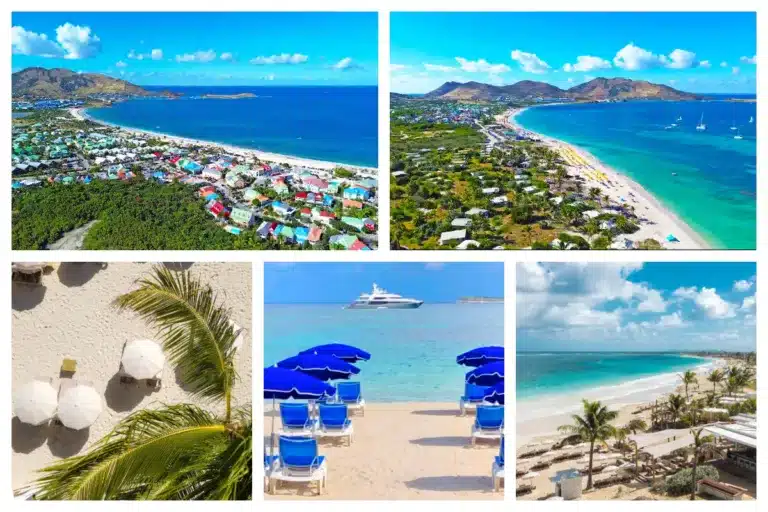
St. Maarten and St. Martin is the smallest inhabited island in the world shared by two countries. Drive from Philipsburg to Marigot and you'll cross an international border without a passport check, a fence or even a stop sign. Usually the only clue is a small sign, and prices switching from dollars to euros. Here's the story of how one small island ended up with two flags and a friendship that has lasted nearly 400 years.
Before the Europeans
Long before any treaty, the Arawak and later the Kalinago (Carib) peoples lived here. The island's earliest name is often said to be Soualiga, the "land of salt," after its salt ponds.
Columbus, salt and a Spanish fort
Legend says Christopher Columbus named the island on November 11, 1493, the feast day of St. Martin of Tours, although historians still debate whether he ever actually saw it. What really drew Europeans was salt. In the 1600s salt was precious for preserving fish and meat, and the Great Salt Pond behind Philipsburg made the island valuable. Dutch and French settlers moved in, and Spain, which claimed the whole Caribbean, took the island by force in 1633 and held it until 1648.
1648: the Treaty of Concordia
When the Spanish left, the French and Dutch settlers who remained decided that cooperation beat conflict. On March 23, 1648, their governors signed the Treaty of Concordia on a hill now known as Mount Concordia. The French took the north, facing Anguilla, and the Dutch took the south, around their fort. Most importantly, both sides agreed to live as friends and allies, with people and goods moving freely. That principle still holds today.
The legend of the walk
Ask a local why the French side is bigger and you'll probably hear this story: to settle the border, a Frenchman and a Dutchman set off around the island in opposite directions, and the line would be drawn where they met. The Frenchman drank wine before he left, the Dutchman drank jenever (Dutch gin), and the Frenchman covered more ground. It's almost certainly not how it happened, but it's the version everyone loves.
Even after the treaty, the island changed hands several times during European wars, including periods under British rule, before the border settled for good in 1815. Some stretches of the line were only formally agreed in a new border treaty signed in 2023, which kept the 1648 promise of free movement.
Slavery and freedom
Like the rest of the Caribbean, the island's plantation and salt economy was built on the labor of enslaved Africans. Freedom came on different dates on each side: slavery was abolished on the French side on May 28, 1848, but not on the Dutch side until July 1, 1863. In the years between, many enslaved people on the Dutch side crossed the open border to freedom in the north. Both dates are public holidays today: Abolition Day on the French side and Emancipation Day on the Dutch side.
The two sides today
- Sint Maarten (Dutch side): a self-governing country within the Kingdom of the Netherlands since 2010. Capital: Philipsburg. The official currency is the Caribbean guilder, which replaced the Antillean guilder in 2025, but US dollars are accepted almost everywhere.
- Saint-Martin (French side): an overseas collectivity of France and part of the European Union. Capital: Marigot. Currency: the euro, though many places also take dollars.
- Languages: English is spoken everywhere, and you'll also hear French, Dutch, Spanish, Papiamento and Creole.
- The border: still completely open, just as the 1648 treaty intended.
St. Martin's Day: November 11
Every November 11 the whole island celebrates St. Martin's Day, a shared holiday honoring centuries of living side by side. The two governments take turns hosting the official ceremony, with flags, music and local food. If you're here in November, it's a lovely way to see the island's unity up close.
See the history for yourself
- The Border Monument: on the main road between Philipsburg and Marigot, first built in 1948 for the treaty's 300th anniversary. A fun photo stop with one foot in each country.
- Fort Louis, Marigot: climb up for one of the best views over Marigot Bay toward Anguilla, then browse the Marigot market below.
- Fort Amsterdam, Little Bay: the ruins of an early Dutch fort on a peninsula near Philipsburg, with old cannons and great views.
- Lady Liberty statue, Marigot: at the Agrément roundabout, a tribute to the fight against slavery.
- The Great Salt Pond, Philipsburg: the reason the Dutch came in the first place. You'll pass it on the way into town.
Explore both sides from one base
One of the best things about the island is how easy it is to enjoy two countries in one day: croissants in Marigot for breakfast, an afternoon on a Dutch-side beach, dinner in Grand Case. Read our guide to the best beaches on both sides and our guide to the island's food and drink, see the coastline from the water on one of our boat trips, or find a vacation rental to call home while you explore.
Did you know the island's history before your visit? Tell us which side you liked best!